Contents
Scroll to:
https://doi.org/10.23947/2414-1143-2026-12-2-12-17
Scroll to:
Introduction. This paper examines the issue of socio-political modernization in the Western civilizational sphere in the context of globalization. The relevance of this study stems from the crisis of universalist models of Western modernity, the reevaluation of linear-progressive interpretations of historical development, and the need for a philosophical understanding of modernization practices in a multi-structured global world. The aim of the article is to examine and represent the practice of the West’s socio-political modernization in correlation with globalization processes, models, and stages of modern development. Within the framework of this objective, the study addresses the analysis of the global context of modernization, historical examples and analogies of the modernization of states and societies, as well as the characteristics of theoretical modeling in the social sciences and humanities.
Materials and Methods. The methodological framework of this study is based on retrospective and comparative analysis, philosophical hermeneutics, and ideal-typical modeling methods.
Results. This study identifies the specific characteristics of the global context of modernization and analyzes the typology and waves of globalization, as well as their upward and downward trends, in relation to various “paths” of modernity. It is shown that globalization processes have a significant impact on the forms and models of sociopolitical modernization, as well as on the nature of philosophical interpretations of modernity.
Discussion and Conclusion. It is concluded that globalization functions not only as a process of integration and standardization of social practices, economies, and models of political governance, but also as a means of spreading Western liberal-capitalist modernity. The methodological significance of analyzing modernization practices and the limitations of universalist concepts of progress in the context of contemporary global development are substantiated.
Kerimov O.Yu. The Practice of Socio-Political Modernization in the Western Civilizational Sphere: Globalization, Models, and Stages of Modernity. Science Almanac of Black Sea Region Countries. 2026;12(2):12-17. https://doi.org/10.23947/2414-1143-2026-12-2-12-17
Introduction. Against the backdrop of accelerating globalization, the issue of socio-political modernization has taken on particular relevance, as traditional interpretations of modernity — shaped by Western-centric concepts of progress — are encountering growing theoretical and practical contradictions. The current stage of global development is characterized by a crisis of universalist models of modernization, which for a long time were regarded as normative and applicable to various historical and cultural contexts. This necessitates a philosophical understanding of modernization not only as a theoretical construct but also as a set of historically realized socio-political practices.
The central issue of this study is that, in socio-political philosophy, modernity is often interpreted in isolation from the global context and the actual historical forms of its practical implementation, leading to the absolutization of certain models and the underestimation of alternative paths of development. In the context of the formation of a multi-structured global world-system, an analysis of the correlation between globalization processes and various models of modernization becomes methodologically significant. In this regard, the Western civilizational sphere requires special attention both as the source of dominant concepts of modernity and as the space for their historical testing.
The aim of this article is to examine and describe the practice of sociopolitical modernization in the Western civilizational sphere in relation to globalization processes, as well as to the models and stages of modern development. To achieve this goal, a number of research tasks are to be addressed. These include an analysis of the specific nature of the global context of modernization and its impact on the transformation of the socio-political structures of states and societies. Of significant importance is the examination of historical examples and analogies of modernization, which allow for the identification of both universal and contextually determined features of modernity. A separate task is the study of the practical implementation of various models of modernization and their philosophical interpretation. Furthermore, this article aims to analyze the theoretical and methodological foundations for modeling modernization processes in the social sciences and humanities. The achievement of these goals and objectives is aimed at clarifying the methodological boundaries and heuristic potential of the philosophical analysis of modernity in the context of contemporary global development.
Materials and Methods. The methodological framework of this study is based on retrospective and comparative analysis, philosophical hermeneutics, and ideal-typical modeling methods, which allow us to view modernity as a historically conditioned and theoretically constructed form of social development [1, p. 345; 2; 3, p. 84; 4–6].
Results. It should be noted that, in relation to the study of modernization models of development, the process of globalization is not merely a reflection of the integration and standardization of social practices, economies, and models of political governance on a global scale; rather, according to many scholars, it represents the development of these processes along the lines of the Western model of modernity. Globalization, therefore, constitutes a process of transformation and restructuring of societies, which may be incremental or revolutionary in nature.
Chronologically, this process is primarily marked by the beginning of the Age of Discovery, the Modern Era, industrialization, and so on, as it concerns the emergence of the modern Western chronotope of modernization and its global impact on the world-system. For example, I. Wallerstein explains the process of modernization and globalization through the spread of the influence of the Western capitalist economy to other countries and the creation of a “centerperiphery” system [7], the origins of which can be traced back to the mid-15th to early 16th centuries. R. Robertson [8] agrees with Wallerstein, also considering the 15th century to be the beginning of the five stages of globalization.
E. Giddens [9] and W. Robinson [10] consider globalization to be a specific contemporary phenomenon linked to the scientific and technological revolution, the development of information technology and communications on a global scale, the transition at the end of the 20th century to new economic systems, and capitalism in its imperialist phase and beyond.
G. Therborn [11, 12] identifies as the primary marker of globalization the intensity of the process of diffusion not only of technologies but also of religions, socio-political models, etc., which cross continental borders and acquire universal global significance in the organization of states and societies. In this interpretation, globalization chronologically begins well before the 15th century (in the 4th–8th centuries CE). At the same time, globalization acquired a truly global scale in connection with the European conquest of the Americas, which became a source of wealth for the colonial powers and predetermined their global dominance not only in the economy but also in politics, culture, science, and so on.
For our study, it is important to highlight the correlation between the essence of globalization as a transcontinental, interstate integration and unification, and the essence of Western modernity, which in this interpretation is equated by Western scholars with the processes of progressive societal development based on the principles of Eurocentrism, with its inherent attitudes and models of economy, culture, art, socio-political organization, etc.
G. Therborn, in identifying the stages and waves of globalization, points to the corresponding “paths of modernity” [12]:
– “Organic modernization,” initiated by the French Revolution of 1789, which marked the beginning and laid the groundwork for the triumph of modernity in Europe.
– The path of the New World, pioneered by American settlers. In many ways, this was a process of spreading Eurocentric values and models across the American continent.
– “The third path to modernity is the path of colonial trauma: identification with the aggressor or rebellion against him” [12].
– The fourth path: reactive modernization. “Under this path — reactive modernization — modernity was introduced by a segment of the domestic elite that perceived a strong external threat to its territory, and was imposed from above on a population that continued to adhere to traditional values” [12].
– The fifth path is hybrid, as it focuses on a combination of various development options and models of modernity, a path that has been tested, for example, by China.
If we attempt to identify certain phases or stages in the evolution of modernity as a practice of historical development, the following stages can be identified:
– Classical capitalism, classical Western modernity, based on the wealth that England, France, Portugal, Italy, and Spain plundered during the colonial era in the course of the Great and Little “Conquests”: an era characterized by the imposition of “progress” upon the “barbarians” whom they “civilized,” while extracting resources from the colonies that brought the metropolises profits unprecedented in history. Classical “first” modernity, thus, was based on industrialization in the economy, a linear-progressive approach in the social and political sciences, and the principles of Eurocentrism, with their inherent justification of the superiority of the Western path of development, the market, institutions, and practices of conquest, reshaping the world, and bringing ever-new territories under the control of capitalist powers. It is also significant that in the West’s self-narratives, the practices of early modernity were presented as the historical embodiment of concepts such as democracy, enlightenment, the market, justice, freedom, rationalization, and the emergence of the individual as a purpose-rational being, etc.
We can agree that, in practice, “Western strategies in the context of the collapse of the colonial system increasingly boil down to directly containing rising centers of power and halting their modern development” [13].
Late modernism, as a sociopolitical theory, faces the reality that technologies are spreading globally at a significantly faster pace than the collective West originally developed and mastered them, and countries that were positioned during the colonial era in economics and the social sciences as backward, pre-modern, barbaric, etc., are rapidly closing the technical-technological and socio-economic gap with European powers that have already moved beyond the stage of classical capitalism. Consequently, such criteria of progress in classical modernity as socio-economic superiority and the level of technological development cease to be sufficient grounds for dividing societies into progressive and backward ones, undermining the foundations of the West’s self-justification as the bearer of universal values on a global scale and its expansionist colonial and neocolonial policies.
– The imperialist phase of Western capitalism and modernist concepts, followed by the global phase, confirm in political terms that the capitalist world-system and the “center-periphery” model are undergoing a reevaluation, as non-Western societies demonstrate significant progress in terms of urbanization, labor productivity, the welfare state, sustainable growth, etc., while the capitalist West, on the contrary, is being shaken by crises and stagnation.
In philosophy, the downward trend in the development of the West is substantiated, on the one hand, by Spengler’s concept of the “decline of the West” [14], which diagnoses the death of the Faustian “soul of culture” and the transition to a stage of dying civilization, and, on the other hand, by the philosophy of Marxism [15], which regards imperialism as the final stage of capitalism’s development, inevitably and objectively followed by its destruction at the hands of the proletariat, which is forming and developing as a political subject.
The events of World War II and the Soviet Union’s leading role in the victory over fascism effectively prevented yet another Western-style redivision of the world, whose neocolonial policy had changed in terms of the methods and technologies used to implement the idea of Western domination and superiority, but remained the same in substance: destructive and expansionist toward everything that did not align with the interests of the imperialist Western elites and the normative Western model of progress and development. The historical practice of the evolution of Western modern societies and non-Western states, some of which followed the socialist path, has shown that the ideals of freedom, choice, growth in socio-economic well-being, and a democratic political system have no real correlation with the ideas of Western economic, political, and cultural domination.
Some scholars, drawing on Marxist theory and methodology, rightly identify the following stages in the development of capitalism and modernity, based on its objective realities:
• The stage of initial capital accumulation.
• The stage of capital development and reproduction on its own terms, based on industrial production and the corresponding political economy of labor and capital.
• The “decline” and self-negation phase of the capitalist system, which can be divided into the following sub-phases: the expansion of capitalist markets and the globalization of the capitalist system of world restructuring; the self-restraint of capitalism and the introduction of state regulation of markets; the scientific and technological revolution against the backdrop of high growth rates in the service sector and the formation of a consumer society; the economic consequences of the “Great Depression”; the crisis of “state regulation and social reform of capitalism” [16], which coincides with the crisis of the world socialist system, “leading to the triumph of the global hegemony of capital (more commonly known as neoliberal globalization).” The material basis of this process is the expansion of information technologies, which provide an adequate foundation for the rapid growth of the sphere of transactions, financial speculation, and the like, leading to the global financial and economic crisis” [16]. It is also important to note that global “casino capitalism” and “economic imperialism” do not, however, abandon the glorification of Western modernity as the ideal of progressive development for states and societies within the context of a unipolar world order.
It should be noted that the crisis of global capitalism and the Western modernity based on it, in addition to the factors already mentioned, was accompanied by a massive environmental crisis, which also undermined the justification of Western modernity as a progressive model of society. We can agree that “the theory of ecological modernization, which emerged in the 1980s and is currently developing in Western academia within the socio-ecological tradition, plays a significant role in the study of modernization theory. In the post-Soviet space, this theory is represented by the works of O. Yanitsky and I. Kulyasov. One of the first to develop this theory was the Dutch sociologist A. Mol, who argues that this theory aims to understand and interpret how modernist industrial society copes with the ecological crisis” [17].
Drawing on U. Beck’s theories of the risk society and reflexive modernization, as well as E. Giddens’ theory of late modernity [18], the essence of the ecological aspect of modernization lies in highlighting the problematic dysfunctions of interaction within the “human-nature” system, which, on a global scale, give rise to a crisis of social development and global risks.
It should be noted that, on the one hand, the acceleration of socio-technical development and globalization generates global environmental problems and risks, and, on the other hand, — the understanding of environmental problems and the ecological paradigm of modernization also encompasses social and humanistic knowledge on a global scale, requiring scientific-philosophical and socio-political reflection on a corresponding scale, as well as adequate political decisions by state leaders to prevent an environmental catastrophe.
Discussion and Conclusion. Thus, from a doctrinal perspective, a comprehensive analysis reveals the following logic and sequence, which encapsulates the stages of development of Western modernity:
– the “Age of Enlightenment” and the “first-generation” modernity it gave rise to. Its advantages, both practical and ideological-cognitive, were demonstrated by the power of arms and the economy of expanded production during the first industrial cycle (according to N. Kondratiev, this is Cycle I and part of Cycle II: 1815–1920).
– This marks the beginning of a new phase of modernization. From a doctrinal perspective, it involves the establishment of a new understanding of the historical process, including its phase of modernization, based on Marxist and Weberian (as an antithesis) methodologies, as well as the formation of non-classical premises for humanistic modernity. In political and practical terms, this marked the first crisis of “colonial modernity,” the formation of the premises for the imperialist phase of the economic platform of modernity, the onset of a global economic realignment and the “sliding” into World War I, and the beginning of socialist modernization as alter-modernization. Accordingly, the doctrinal basis of modernization also changed, primarily in the form of a bifurcation. The trajectory of a different modernity was outlined — one that combined elements of Western industrialism and non-Western traditionalism.
For many decades, this kind of bifurcation was viewed either as the first phase in the transformation of the capitalist socio-economic formation or as a preparatory phase in the linear-progressive development of the technological paradigm: a step on the path from industrialism to post-industrialism. In reality, however, the political-economic and sociocultural developments in the second modernization cycle followed a synergistic scenario: a bifurcation into basic and alternative trends of modernization → proliferation (“replication of initial models”) within the framework of the “parent” modernization cluster and the cluster of “postcolonial and sovereign modernization.” With the formation of a multi-structured global-social world-system.
In the West, a non-classical modernist paradigm (technoglobalism; cyberglobalism, ecoglobalism; NBJCS-globalism, etc.) and a postmodernist paradigm evolving into the realm of postmodernism, metamodernism, and the like. However, these explorations have not yet yielded significant breakthroughs and remain exploratory in nature, with a short — to medium-term focus. Similarly, the long-standing research efforts of the “Club of Rome” researchers and experts, who over 50 years have concluded that a new philosophical, methodological, and worldview platform is necessary to model the dynamics of change in the modern global world [19].
The trend toward Westernization, which has dominated for over 200 years in various forms (pre-Marxist, Marxist, liberal, etc.), has been sidelined and is now being reevaluated.
The most sought-after variant of the economic-technological version in its latest forms, beginning in the 2000s, was based on an interdisciplinary innovation-technology platform (NBJCS technologies) and has taken on distinct project management forms of socio-technological strategizing and practical implementation.
1. Weber M. The ‘Objectivity’ of Knowledge in Social Science and Social Policy. Collected Writings. Moscow: Progress; 1990. pp. 345–415. (In Russ.)
2. Beck U. Risk Society: Towards a New Modernity. Moscow: Progress Tradizia; 2000. (In Russ.)
3. Komissarov I.I. Modeling in Social and Humanities Cognition: Max Weber’s Ideal-Typical Constructions. Manuscript. 2018;92(6):84–88. (In Russ.) https://doi.orq/10.30853/manuscript.2018-6.20
4. Weber M. Some Categories of Interpretive Sociology. Weber M. Selected works: The Protestant Ethic and the Spirit of Capitalism. М.; СПб; 2014. (In Russ.) https://doi.org/10.1111/j.1533-8525.1981.tb00654.x
5. Weber M. Science as a profession and vocation. Weber M. Selected works. Moscow; 2015. (In Russ.)
6. Gadamer H.-G. Truth and Method. Trans. from German by B.N. Bessonova. Moscow: Progress; 1988. 704 p. (In Russ.)
7. Wallerstein I. World-Systems Analysis: The Modern World-System: Political Economy and Geoculture. Dilemmas In Global Political Development and The Social Sciences. Trans. from English. URSS. 2. 2024. 400 p. (In Russ.)
8. Robertson R. Globalization: Social Theory and Global Culture. L., Newbury Park, New Delhi: SAGE Publications; 1992. 224 p.
9. Giddens A. Runaway World: How Globalization Is Reshaping Our Lives. Moscow: Ves Mir; 2004. 120 p. (In Russ.)
10. Robinson W. A Theory of Global Capitalism: Production, Class, and State in a Transnational World. Social Sciences and Humanities. Russian and Foreign Literature. Series 9 Oriental and African Studies: An Abstract Journal. 2008;2:11–22. (In Russ.)
11. Therborn G. Cities of Power: The Urban, The National, The Popular, The Global. Moscow: Higher School of Economics Publishing House; 2020. 472 p. (In Russ.)
12. Therborn G. The World: A Beginner’s Guide. Moscow: Higher School of Economics Publishing House; 2015. 336 p. (In Russ.)
13. Fishman L.G., Martyanov V.S. Modernity Is Not The West. Russia in Global Affairs. 2025;1:203–220. (In Russ.) https://doi.org/10.31278/1810-6439-2025-23-1-203-220
14. Spengler O. The decline of the West. Essays on the Morphology of World History. Vol. 1. Gestalt and Reality. Translated from the German by K. A. Svasyan. Moscow: Mysl; 1993. 663 p. (In Russ.)
15. Marx K. A Contribution to the Critique of Political Economy. In: Marx, K., and Engels, F. Collected Works. Vol. 46, Part 1. Economic Manuscripts of 1857–1859. Moscow: Gospolitizdat; 1969. 618 p. (In Russ.)
16. Buzgalin A.V. Evolution of Economic Theories and The Stages of Genesis, Development and The Decline of Capitalist Market System. Problems of modern Economics. 2013;48(4):88–89. (In Russ.)
17. Matveenko U.I. Modernization: Theory and Modern State. Izvestiya Tula State University. Humanitarian sciences. 2012;1–1:153–164. (In Russ.)
18. Giddens A. The Consequences of Modernity. A New Post-Industrial Wave in the West. An Anthology. Moscow: Academia; 1999.
19. Starostin A.M. A New Philosophy of Global World: Problematic Representation. Moscow: Mini Type; 2021. 234 p.
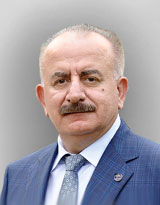
Kerimov Oleg Yurevich, Cand. Sci. (Philosophy), Educational and Methodological Office of University History, Platov South-Russian State Polytechnic University (132, Prosveshcheniya St., Novocherkassk, 346428, Russian Federation)
Kerimov O.Yu. The Practice of Socio-Political Modernization in the Western Civilizational Sphere: Globalization, Models, and Stages of Modernity. Science Almanac of Black Sea Region Countries. 2026;12(2):12-17. https://doi.org/10.23947/2414-1143-2026-12-2-12-17
 Email this article (Login required)
Email the author (Login required)
Email this article (Login required)
Email the author (Login required) 344000, Rostov-on-Don, Gagarin sqr, 1, building 8, office 411.
Tel/fax: +7 (863) 273-86-63
e-mail: science-almanac@mail.ru