Contents
Scroll to:
https://doi.org/10.23947/2414-1143-2026-12-3-8-12
Scroll to:
Introduction. The purpose of this study is to analyze N. Berdyaev’s views on the existence and development of elites in modern society. In examining the issue of the presence of cultural and political elites, Berdyaev specifically emphasized that the elitist nature of society is coming into increasing conflict with contemporary trends in social development. The emergence of mass culture and, more broadly, mass society, renders the existence of elites unnecessary and contrary to contemporary social processes. According to Berdyaev, this contradiction between democratic and elitist principles in culture and politics can be overcome only by a new spiritual (religious) revival, which will remove the limitations of cultural and political existence.
Materials and Methods. The historical method and the comparative analysis method are used; general theoretical methods of scientific research, as well as dialectical and structural-functional approaches, are applied.
Results. Berdyaev specifically emphasized that modern bourgeois liberal democracies, which are based on the principle of popular sovereignty, create new forms of human enslavement. In these societies, the formal principle of the arithmetic majority prevails, allowing the authorities to act on behalf of the people and making the social environment as a whole more just and uniform than it was before. However, this principle is implemented not by creating conditions for the spiritual enrichment and personal development of each individual, but by forcing everyone to conform to a single spiritual and social standard.
Discussion and Conclusion. A defining feature of the modern era is that the influence of the masses in history is no longer hidden but is taking on increasingly open and explicit forms, transforming the elitist nature of society into an increasingly unnatural and abnormal state. The masses are becoming increasingly active in politics. Liberal democracies, Berdyaev emphasized, are already becoming obsolete; this is a phase that has been left behind not only for Europe but for world history as a whole. All of the processes noted above in contemporary society, according to Berdyaev, lead to the conclusion that the era of cultural and political elites is coming to an end; the elitist nature of society is objectively becoming obsolete, and it has no future.
Buylo B.I. N. Berdyaev on the Main Trends in the Development of the Elitist Nature of Contemporary Society. Science Almanac of Black Sea Region Countries. 2026;12(3):8-12. https://doi.org/10.23947/2414-1143-2026-12-3-8-12
Introduction. In examining the issue of the existence of cultural and political elites in modern society, Berdyaev specifically emphasized that the elitist nature of society is gradually becoming obsolete. The emergence of mass culture and, more broadly, mass society, renders the presence of elites unnecessary and contrary to contemporary social processes. In considering the development of various cultures, Berdyaev noted that all of them ultimately fade into oblivion. But truly great cultures do not disappear without a trace. They continue to exist in the enduring values they have created. Greco-Roman culture lives on in Arab culture, in medieval culture, and in modern European culture. Everything that is transitory, temporary, and conditioned by the indirect influence of everyday life disappears.
Christianity “broke open the pagan heavens” and made it possible to grasp the tragic nature of culture’s situation in the modern world. “In the most refined fruits of culture,” wrote N. Berdyaev, “one senses a dissatisfaction with culture, the inadequacy of culture, a painful fracture within it, and a search for paths to a way of being beyond culture”. The crisis of culture and the search for a new existence that transcends culture take place among that select minority who have fully comprehended culture and exhausted its paths in the highest cultural stratum. This process was experienced by such figures as Nietzsch and Ibsen, Huysmans and L. Bloy, Dostoevsky and Tolstoy” [1, p. 257]. However, Berdyaev emphasized that for the absolute majority of people, no cultural crisis exists.
It is impossible to perceive the transcultural while remaining at the pre-cultural level. In this regard, according to Berdyaev, the crisis of culture is a purely elitist or aristocratic phenomenon. Only a very small minority can arrive at a correct or adequate understanding of it. By “aristocracy” Berdyaev naturally meant not social status, but the privilege of spiritual creativity.
The rejection of high culture in society today is, as a rule, linked to the lack of cultural awareness among those who practice nihilism toward culture. “Culture,” N. Berdyaev emphasized, “never existed for the masses of humanity and never served to satisfy their demands and requirements. The “national character” of culture did not at all mean conformity to the level of the masses or the fulfillment of their demands. National character was an expression of the spirit of the people; a genius could express it better than the masses” [2, p. 355]. Today, however, the “national character” of culture is increasingly understood to mean its conformity to the level of the people’s consciousness.
They demand that culture take into account the needs of the working people. This effectively leads to the transformation of culture and its dissolution into civilization. The dominance of the masses in culture occurs both in bourgeois democracies with their disguised dictatorship of money, and, according to Berdyaev, under communist rule with its open dictatorship of worldview.
In liberal democratic societies, the creative work of cultural figures depends on capital and the vulgar tastes of the masses. “Nineteenth-century capitalism, with its economism and the hidden dictatorship of money,” wrote N. Berdyaev, “distorted and deformed the purity of culture, adapting it to the interests of the bourgeois classes” [2, p. 356]. Cultural creativity became an activity aimed at making money and serving the economically dominant, but, on the whole, culturally impoverished strata of society.
In fact, the entire pre-capitalist culture was religious, which allowed it to unite the common people with the elite and the aristocracy. According to Berdyaev, neither philosophy, nor art, nor science could have united the popular strata with the aristocratic elite of society without religion. The secularization of culture simultaneously meant the separation of the cultural elite from the life of the people. The masses are increasingly encroaching upon culture, and this is entirely justified, since they “cannot remain in darkness”. However, this process inevitably leads to a qualitative decline in the level of culture. High culture, meanwhile, retreats into the circle of a narrow spiritual elite, becoming, in effect, increasingly incomprehensible and therefore seemingly unnecessary to the people.
Only a new spiritual (religious) revival can resolve the contradiction between democratic and elitist principles in culture, thereby removing the limitations of cultural existence. But to achieve this, humanity must complete its culturalhistorical journey. Not only the individual, but also, through the individual, all of humanity must realize the limitations of the cultural sphere of development itself. Humanity must understand the necessity of transitioning from objectified, i. e. cultural existence to free spiritual creativity. Without the emergence of such a fundamentally new spirituality, it is no longer possible to overcome the crisis in contemporary culture.
Materials and Methods. The historical method and the comparative analysis method are used; general theoretical methods of scientific research are applied, including analysis, synthesis, deduction, and the dialectical and structuralfunctional approaches.
Results. Berdyaev emphasized that modern Western democracy is completing the destruction of European humanism, which was founded on the revival of antiquity. The rise of mass culture and the technological transformation of society are definitively dehumanizing human life. Man, created in the image and likeness of God, is transformed into a machine, an automaton that soullessly carries out the orders of the majority. Yet the majority itself acts as a mob, manipulated and controlled by those in power.
Nietzsche was right when he emphasized that people had killed God. However, Nietzsche himself, in Berdyaev’s words, by creating the image of the Übermensch, killed the real human being within it. The latter can no longer, in fact, be a person and cannot develop his or her spiritual world. A person develops a desire to rise above his or her fellow human beings. A person becomes obsessed with ideas of power and might, failing to understand that both are merely objectified, distorted forms of existence.
In gaining power over others, a person begins to see the meaning of his life; for the sake of his own power, he is willing to sacrifice everything in this world. “Power becomes objectified,” N. Berdyaev emphasized, “and is detached from human existence. The value placed on the power of technology, the power of the state, the power of race, and the power of class dehumanizes people; in the name of these powers, any treatment of people is permitted” [2, p. 326]. People lose awareness of the true metaphysical meaning of their existence, replacing it with transient goals and ideals.
Discussion and Conclusion. Throughout history, human beings have sought to organize their lives in a way that more adequately reflects their spiritual aspirations and, above all, their need for freedom. They have strived to build a just and free state, only to end up with a society of the oppressed and “wronged slaves.” “Generally,” wrote N. Berdyaev, “people do not understand that the true depth of the problem lies not in achieving such an organization of society and the state in which society and the state would grant freedom to the human person, but in affirming the freedom of the human person from the unlimited power of society and the state” [2, p. 330]. This, of course, does not mean that one should not strive to improve the organization of society and the state; the point here is that this organization should serve the goal of the gradual liberation of the individual from it.
As a social and political being, a person must coordinate their actions with those of others. Unrestricted freedom for one person in this context would mean arbitrariness and the infringement of another’s rights. However, in the spiritual realm, as a creation of the Creator, a person must have the opportunity to attain absolute freedom.
In a capitalist society, political freedom becomes the privilege of the economically dominant elite, but even for that elite, it takes the form of a suppressed or false freedom. “The crisis of capitalism,” noted N. Berdyaev, “appears to be a crisis of freedom. But truly, this false and fictitious freedom must be overthrown” [2, p. 334]. Freedom is synonymous with the spirit; therefore, Berdyaev believed that as we move from the spiritual to other spheres of social life, freedom is curtailed and diminished.
Modern authoritarian states, founded on the dictatorship of a worldview, create new forms of human enslavement. They operate on the principle of egalitarianism, which makes the social environment more just and uniform. However, this principle is implemented not by creating conditions for spiritual enrichment and the personal development of each individual, but by forcing everyone to conform to a single spiritual and social standard.
They want to turn people into a homogenized mass of individuals who all live and think alike. “The process of equating people in a just manner,” wrote N. Berdyaev, “can, after all, proceed in directly opposite directions. Either the dignity, value, and freedom of every person, of every human being, can be proclaimed because in each there is the image and likeness of God or the dignity, value, and freedom of all people can be equally denied, and the image and likeness of God can be denied in all people” [2, p. 335]. One can strive either for the universal development of genuine spirituality and the uniqueness of each individual, or for universal democratization and mass culture. In contemporary societies, development is carried out primarily along the second path.
According to Berdyaev, there is nothing negative about people’s desire to establish the rule of a dictator or leader. It is a perfectly natural human aspiration to build a society and a state led by an extraordinary, creative, and strong personality, someone capable of taking responsibility and enjoying well-deserved authority and respect. “Without such a singular principle,” noted N. Berdyaev, “no reforms are possible. The democratic principle, in and of itself, becomes inert and conservative; it must inevitably be combined with aristocratic and monarchical elements, understanding the monarchical element not as a monarchy, but as a single-leader system in the form of a president with strong authority or a leader” [2, p. 336]. What is negative about a dictatorship is by no means the fact that it is headed by a strong personality.
The negative nature of modern dictatorships stems from the fact that they are, as a rule, ruled by a mediocre individual who is completely dependent and, therefore, seeks to transform people into a community of obedient, gray mediocrities like himself. “It is striking,” N. Berdyaev emphasized, “that the modern dictatorship of worldview is by no means necessarily linked to genuine spiritual unity or to a truly existing worldview that would permeate the masses as deeply as Christian beliefs once did in the past” [2, p. 336]. Spiritual unity in such a system is established and maintained through the authority of the state.
When the state’s authority is undermined by the authorities’ incompetent and self-serving policies, unity, including unity of worldview, is artificially imposed through fear and violence. People’s idealism and consciousness are temporarily replaced by order and discipline.
At the same time, the authorities’ own fear of the people they govern is growing. “The organization of unity of spirit and worldview by the state,” N. Berdyaev emphasized, “leads in practice primarily to the strengthening of state police forces and espionage” [2, p. 337]. Chaos in history is not overcome by dictatorship, but rather formally organized. Society becomes a modern, liberal-democratic, or authoritarian state, for which the individual serves merely as a means in the process of its development. They strive to transform the individual into a being shaped through social-class or state-liberal conditioning.
Naturally, in bourgeois societies, whether liberal-democratic or authoritarian and fascist in nature, significant differences can be identified that are linked to the specific characteristics of their ideologies and national development. “There is a difference in style and symbolism between Italian fascism and German National Socialism,” wrote N. Berdyaev. Italian fascism is based on the symbol and myth of the state as the supreme being and the highest value; it seeks to continue the Roman tradition and adopt a classical style” [2, p. 337]. This, of course, is a return to paganism, but by its very nature it is less tyrannical than National Socialism.
German National Socialism is based on the notion of a specific race as the highest and supreme value in human life. There is a great deal of mysticism here, as it speaks of the land, the soul of the people, and the significance of blood in determining membership in a particular race. “The state [in National Socialist ideology],” noted N. Berdyaev, “is merely an instrument of race and nationality. But this affects the individual, his inner being, far more deeply than fascist state ideology. The creation of a pure and strong race turns into a maniacal, pathological idea that compels one to subject an entire people who are in a state of collective madness and obsession to psychoanalysis” [2, p. 338]. The false superiority of the Aryan race is proven by shamelessly distorting and falsifying history.
As a rule, both in everyday thinking and in scholarly literature, it is customary to contrast fascism and democracy, viewing them as mutually exclusive concepts. But, according to Berdyaev, fascism is the most highly developed form of bourgeois democracy, its logical product. “Fascism,” he emphasized, “opposes itself to parliamentary, liberal democracy, not to democracy in general. Mussolini, in his book on the principles of fascism, states unequivocally that fascism is democracy, but an authoritarian democracy” [2, p. 338]. This may seem shocking and paradoxical, but, according to Berdyaev, fascism is a logical continuation of Jean-Jacques Rousseau’s doctrine of the sovereignty of the people.
The proclamation of the sovereignty of the people does not in and of itself guarantee the rights and freedoms of the individual. A sovereign people can secure rights and freedoms for itself as a whole, while denying them to the specific individuals who comprise it.
Democracy is the rule of the people, but it is by no means necessarily the rule of its arithmetic majority. “But in reality,” wrote N. Berdyaev, “the sovereign people, like the sovereign proletariat, can abolish all freedom and completely suppress the human personality; it can demand that the individual renounce his or her personal conscience” [2, p. 338]. Having achieved complete control over the state, the people may begin to organize and control the spiritual life of their citizens.
Freedom, by its very nature, has never been an attribute or a component of liberal democracy alone, nor of democracy in general. Torquille, in particular, wrote about this; he considered democracy a threat to freedom. “The people,” wrote N. Berdyaev, “do not necessarily have to express their will in the form of liberal democracy with a parliament; they can express it in the form of authoritarian democracy with a leader endowed with supreme power. We see that it is even possible for a leader with dictatorial powers to emerge while the old democracy remains intact. Such was the case with Roosevelt, …” [2, p. 339]. It is impossible to carry out truly profound social reforms without strong, single-handed authority that would take the initiative and be accountable for them.
Liberal democracies, Berdyaev emphasized, are already a thing of the past; this is a phase that has been left behind not only in Europe but in world history as a whole. Naturally, the gradual decline of their influence in the world is a lengthy process that affects the interests of a vast portion of the population in today’s leading nations. As a result, various relapses are possible; attempts to revive liberalism, as happened, for example, in Russia at the end of the 20th century.
An increasingly characteristic feature of the modern era is that the influence of the masses in history is ceasing to be hidden and is taking on increasingly open and explicit forms, transforming the elitist nature of society into an increasingly unnatural and abnormal state. The masses are becoming increasingly active in politics. Today, in Western democracies, no serious statesman would risk making a decision that would clearly contradict the public opinion of his country’s population.
But returning to the topic of culture, it is worth noting that the highest form of spiritual culture has always been elitist. Naturally, not in the sense that it belongs to any single social class, although that has also been the case throughout history, but in the sense that every society has had exceptionally gifted people and creative individuals who have nurtured and developed it. Today, this elite culture, too, is threatened with gradual extinction. And the issue here is not even the pogroms orchestrated against it in fascist and semi-fascist states.
The existence of the cultural elite without which true spirituality is impossible is threatened by the encroachment of the masses, who are making constant and not entirely unsuccessful attempts to turn it into a mass phenomenon. “The masses,” wrote N. Berdyaev, “demand that people of thought and cultural creativity serve them, fulfilling a ‘social mandate’” [2, pp. 341–342]. They seek to impose certain limits on creativity and to standardize it, which deprives creativity of its original nature and turns it into a routine activity. Sometimes this era of the “social order” is contrasted with the era of “free capitalism,” where, as is commonly believed, bourgeois individualism created space for the development of personal thought and consciousness.
In examining the nature and characteristics of bourgeois individualism, Berdyaev emphasized that it has nothing to do with a person’s spiritual development or the formation of their personality. This form of individualism is merely another manifestation of herd mentality and collectivism. It inherently embodies a petty-bourgeois attitude toward life and isolates the spiritual elite. There is a return to a herd-like form of existence, but on a fundamentally new basis of bourgeoiscivilized conditions. All of the processes noted above in modern society, according to Berdyaev, lead to the conclusion that the era of cultural and political elites is coming to an end, that the elitist nature of society is objectively becoming obsolete, and that it has no future.
1. Berdyaev N.A. The Philosophy of Inequality. Moscow: IMA-PRESS; 1990. 288 p. (In Russ.)
2. Berdyaev N.A. The fate of man in the modern world (toward an understanding of our era). The Philosophy of the Free Spirit. Moscow: Respublika; 1994. pp. 318–362. (In Russ.)
3. Buylo B.I. The fate of Russia in the cultural-historical concept of N.A. Berdyaev. Doctoral dissertation in Philosophy. Rostov-on-Don. 2003. 336 p. (In Russ.)
4. Buylo B.I. The Concept of History and Culture in Russian Sociopolitical and Philosophical Thought of the First Half of the 20th Century. Moscow: MIIT Law Institute; 2014. 124 p. (In Russ.)
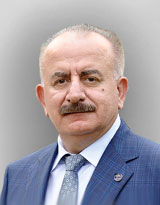
Buylo Boris Ivanovich, Ph.D (Advanced Doctorate) in Philosophy, Professor, Department of Philosophy, Russian University of Transport (MIIT), (9/9, Obraztsova St., Moscow, 127994, Russian Federation)
Buylo B.I. N. Berdyaev on the Main Trends in the Development of the Elitist Nature of Contemporary Society. Science Almanac of Black Sea Region Countries. 2026;12(3):8-12. https://doi.org/10.23947/2414-1143-2026-12-3-8-12
 Email this article (Login required)
Email the author (Login required)
Email this article (Login required)
Email the author (Login required) 344000, Rostov-on-Don, Gagarin sqr, 1, building 8, office 411.
Tel/fax: +7 (863) 273-86-63
e-mail: science-almanac@mail.ru