Contents
Scroll to:
https://doi.org/10.23947/2414-1143-2025-11-4-69-75
Scroll to:
Introduction. During the Great Patriotic War, one of the forms of struggle against the enemy was the activity of partisan loners. There were a lot of them on the territory of the Rostov region. In general, this issue is not covered in historiography both on an all-Russian and regional scale. It is important to analyze and characterize this phenomenon using the example of the Don partisan loners’ exploits. The article is devoted to the study of the activities of partisan loners of the Rostov region during its temporary occupation by German troops. The purpose of the article is to identify specific facts of the struggle of Don partisan loners with the invaders, to analyze the nature, scale, various forms and significance of their heroic actions.
Methods and Materials. The sources of this work are the documents of the Center for Documentation of the Latest History of the Rostov Region, most of which are introduced into scientific use for the first time, and scientific research affecting this topic. The use of historical-systemic and problem-chronological methods made it possible to show the activities of partisan loners of the region during the war.
Results. The term “partisan loner” arose during the war years and was used both in official Soviet office work and in the public environment. This term determined those Soviet citizens who were not members of partisan detachments and underground groups, exclusively voluntarily, of their own free will, made an extremely difficult and literally deadly decision under enemy occupation to carry out various sabotage activities against the German authorities and various industrial, transport and other important objects used by the invaders. Concrete examples reveal the nature and forms of their struggle against the Nazi invaders, which included various types of combat, reconnaissance, propaganda, sabotage work and were exclusively voluntary.
Discussion and Conclusion. The activities of partisans during the war years in various regions of the country, in particular, in the Rostov region, are reflected in historiography. Some aspects of the struggle by the enemy of the Don partisans were touched upon in a number of general studies devoted to the consideration of the general history of the Rostov region, the military period, about the local volunteer movement and about participation in the partisan movement of the Don Cossacks. At the same time, the issue of the Don partisan loners’ activities in historiography has not been considered and raised.
Trut V.P. The Activities of Don Partisan Loners During the Great Patriotic War. Science Almanac of Black Sea Region Countries. 2025;11(4):69-75. https://doi.org/10.23947/2414-1143-2025-11-4-69-75
Introduction. In the history of the struggle of partisans and resistance fighters of the Rostov region with the German invaders during the Great Patriotic War, despite the previous rather significant work of researchers, there are insufficiently studied issues of significant scientific relevance. One of them, of course, is the activities of the so-called partisan loners. The term “partisan loners” arose during the war years and was used both in official Soviet office work and in the public environment. The term determined those Soviet citizens who were not members of partisan detachments and underground groups, who exclusively voluntarily, in the conditions of enemy occupation, made deadly decision to carry out various sabotage activities against the German authorities and various industrial, transport and other important objects used by the invaders.
In the work, on the basis of the studied representative archival source base, various forms of actions during the Great Patriotic War of partisan loners of the Rostov region are revealed [1, 2]. It is noted that the study of their activities in the context of regional research is of great importance, since it allows us to establish at least an approximate number of them and find out the scale of their contribution to the common cause of resistance to the invaders and to the common victory over the enemy.
Materials and Methods. The study was carried out on the basis of identified, systematized and analyzed documentary sources located in one of the main regional archival repositories, in the Center for Documentation of the Modern History of the Rostov Region. Most of them are introduced into scientific use for the first time. A comprehensive and thorough analysis of these documentary sources was based on the principles of scientificity, objectivity and historicism. The historical-systemic and problem-chronological research methods used in the preparation of this scientific work made it possible to analyze the activities of partisan loners of the region during the war years, to characterize the forms and methods of their active and passive resistance to the enemy and their activities during the occupation of the region. Based on these research methods in the analysis of specific actions of partisan loners, it was possible to establish and characterize both the general and special features of this movement, the content and specifics of the motives of their activities. Methods of data analysis and synthesis were also used, as well as general scientific and special scientific historical principles, such as objectivity, scientificity, historicism.
Results. The term “partisan loner” defined those Soviet citizens who were not part of partisan detachments and underground organizations in cities and other settlements, exclusively voluntarily, of their own free will, they made an extremely difficult and literally deadly decision in the conditions of enemy occupation to carry out various sabotage activities against the occupation authorities and various industrial, transport and other important objects used by the occupiers [3, 4].
As a rule, they were residents of rural settlements, villages. However, they were not resistance fighters in the full sense of the word, whereas, firstly, they were not members of clandestine organizations. Secondly, they acted exclusively on their own. Thirdly, elderly people prevailed among them. Fourthly, if among the partisans and resistance fighters there were a fairly large number of communists and Komsomol members, ideological supporters of communist ideology and the Soviet state-political system, then the overwhelming majority of partisan loners were not members of the party and the Komsomol and entered the fight against the enemy and, in the literal sense of the word, risked their lives based on personal not so much ideological and political, how many moral qualities, the dominant among which was a deeply conscious sense of true patriotism. It is important to note that this term “partisan loners” arose and was used in official Soviet office work, and in the public environment during the war.
The names of partisan loners and the exploits they accomplished often remained unknown. The only exceptions were those that, for a number of reasons, gained public fame during the war years or immediately after its end. Thus, for example, back in the war years, thanks to a coincidence of positive circumstances, the exploit of Matvey Kuzmich Kuzmin, an 83-year-old resident of the village of Kurakino, Pskov Region, became widely known. He deliberately ambushed the German detachment, repeating the famous exploit of Ivan Susanin. This fact was even noted in the summary of the Soviet information bureau on February 25, 1942 [5].
Among the Don followers of the exploits of Ivan Susanin and Matvey Kuzmich, Prokofy Serdyukov and Mikhail Cherednichenko can be called. In the Veselovsky district of the Rostov region, the Germans took a 55-year-old collective farmer of the “Pobeda” agricultural artel Prokofy Serdyukov as a guide to the Pozdeevka farm, where parts of the Red Army were located. But he deliberately led the Germans in the opposite direction. All night a detachment of Germans wandered across the steppe, never getting to the place they needed. The Germans beat the old man very severely and, believing that he had died, threw his bloody body into a ditch [6]. In the memorandum of the secretary of the Chertkovsky district party committee of Mizhiritsky to the secretary of the Rostov regional committee of the All-Union Communist Party Pyotr Ilyich Alexandryuk dated May 2, 1944, the following fact was cited: “During the retreat of the Germans on the night of December 25−26, 1943, they took comrade Cherednichenko M.N. as a guide so that he would lead the German unit with tanks to the city of Millerovo. Cherednichenko M.N. specially led the Germans through a bad bridge over the Kalitva River, as a result of which one tank completely drowned, and the rest got stuck. Tanks are still there to this day. Cherednichenko M.N. accidentally escaped” [7]. At the end of this memorandum, Mizhiritsky requested M.N. Cherednichenko to be awarded the honorary combat medal “For Courage” [8]. Although the names of these miraculously surviving heroes and their exploits have become known, they have not been awarded any government awards and at present, unfortunately, they are practically unknown to scientists or the general public. They are not mentioned either in historiography, or in art-documentary and other mass literature, or in educational publications on the history of the Rostov region.
As the occupied Soviet territory was liberated, the exploits and heroic struggles of many such surviving and deceased lone fighters became known. Thus, for example, the circumstances of the courageous actions and death of 18-year-old Evdokia Alexandrovna Kucherenko became widely known. She was not able to carry out any hostilities. E. Kucherenko fought the enemy as best she could, tearing down enemy leaflets and actively conducting Soviet agitation among fellow villagers. She was captured by the invaders and their accomplices, had been in prison for twenty days. She was constantly under examination, severely tortured and beaten. She was executed [9]. But the seemingly very modest exploit of Evdokia Kucherenko can rightfully be staged with the most heroic deeds of famous partisan loners, since it personally demonstrated to both the enemy and the locals its disobedience to the invaders, unbending fortitude, great courage, faith in victory.
This exploit of E.A. Kucherenko and the heroic deeds of many other brave fighters against the invaders were made public in many respects thanks to the practical implementation of the well-known decisions of the country’s top party and state leadership on the preparation in each liberated area of detailed reports on the fight against the enemy of local partisans and underground workers during the occupation. These reports, as a rule, were prepared by the local regional leadership on the basis of repeatedly verified factual data presented by regional party bodies and double-checked by local and regional bodies of the NKVD and special commissions of regional party committees.
As a result, the regional party committee began to receive the first carefully verified and fully reliable information about the resistance of local residents to the enemy during the occupation of a particular district of the Rostov region. In particular, already on August 24, 1943 in the memorandum of the secretary of the Peschanokopsky district party committee Baranov to the regional committee of the All-Union Communist Party it was said: “For the entire time of the enemy occupation (6 months) there were not any partisan detachments or groups in the region. The fight against the German invaders was waged by loners (highlighted by us − Auth.), separately ... The old collective farmer Sterlev Andriyan Makarovich from the village of Zhukovka throughout the entire period of occupation hid the battle banner of the 43rd Guards Rifle Regiment left for him to preserve. According to denunciations, he was arrested six times by the Germans, beaten, tortured, sought to issue a banner, but he was silent. After the liberation of the region, he was awarded the Order of Red Combat Banner and was awarded the title of Guardsman” [10]. The secretary of the Razvilensky district party committee honestly reported that there were not any partisan detachments in the area, “only partisan loners women (highlighted by us − Auth.), Komsomol members Piskunenko, Polulyakh, Kravtsova and Yunosheva acted only, as was established by the NKVD after the liberation of the area” [11].
At the end of 1943 the first secretary of the Rostov regional committee of the All-Union Communist Party Pyotr Ilyich Alexandryuk sent a letter to the first secretaries of the regional party committees under the heading “Top Secret”, demanding based on the decision of the All-Union headquarters of the partisan movement on the creation of the All-Union accounting of partisan participants in the Great Patriotic War, presentation of the most verified and complete lists of all partisans, as well as, as was directly indicated in this letter, persons who fought the invaders as partisan loners. In particular, on December 15, 1943, such a letter was received by the first secretary of the Belo-Kalitvensky district party committee [12]. On December 25, a similar letter No. 974 was received by the Bagaevsky District Committee of the All-Union Communist Party [13]. Later, similar letters were sent to all other districts of the Rostov region. Moreover, in March 1944 such letters from the Rostov Regional Party Committee were again sent to all district committees of the region.
Active work on the collection and provision of this information was carried out during the period of 1944 and the first half of 1945. The response letters of the secretaries of the district party committees received by the regional party committee contained detailed reports prepared by all district committees of the All-Union Communist Party of the Rostov region on the activities of partisans and underground workers during the occupation in the territory of the corresponding region.
They contained information of a very different nature, and with detailed descriptions of the actions of local partisans and underground workers, and the struggle of partisan loners, and direct honest answers that there were not any partisan detachments on the territory of a particular region, that only individual lone patriots fought the enemy or that there was no resistance to the invaders in the area. It is noteworthy that in almost each of these reports of a particular district of the region there is a separate section entitled “Partisan Loners”.
Among the many of all these answers, some can be distinguished as the most indicative. Thus, in a letter from the secretary of the Dubovsky district committee of the party Gurov “Information on the people’s avengers” dated May 15, 1944, numerous facts of sabotage to the occupation authorities, rescue of the Red Army from the prisoner of the war camp, anti-fascist agitation by the residents of the district were cited in the name of the secretary of the regional committee Alexandryuk. Among other things, the following fact was noted: “the former cleaning woman of the collective farm government, 63-year-old Bekurova Ksenia Semyonovna, told the population that the Nazis would not defeat her, for this she was arrested and brutally tortured, they cut off her breasts, cut off her nose, cut off her hands, she took death having said, “You cannot defeat Russians” [14]. In the letter from the secretary of the Yegorlytsky district committee of the All-Union Communist Party Berezin to the secretary of the regional party committee Alexandryuk, it was directly stated: “There were not any large partisan detachments in the region, but during the occupation alone and in small groups, collective farmers, workers and employees in every possible way punished the Germans (highlighted by us − Auth.), they did not follow their orders, they disrupted the planned activities of the Germans with all sorts and various methods” [15].
After considering and analyzing all reports received from the districts of the region on activities in their territories during the period of enemy occupation of partisan detachments, underground organizations, partisan loners, at the end of 1944 under the direct supervision of the first secretary of the Rostov regional committee of the All-Union Communist Party Pyotr Ilyich Alexandryuk, the consolidated, very extensive 238-page memorandum “On the activities of partisan detachments and groups in the Rostov region during the German occupation” was prepared and signed by him [16]. It contained, among other things, special chapters on the actions of partisan loners and, as stated in the document, the patriotic affairs of the population during the occupation [17].
This document cited numerous and diverse examples of the struggle of patriotic residents of the region with the German invaders and their accomplices from the local population. For example, in the Tarasovsky district, “comrades Garkushin, a party member, a former district policeman and Volodin, a party member, and a former head of the criminal investigation department, acted as partisan loners. Garkushin led Soviet intelligence officers to the rear of the Germans and participated with them in the attack on the German unit, personally shooting two enemy soldiers” [18]. After the Germans occupied the area, Volodin made his way to the village of Romanovskaya one night and set fire to a warehouse with grain, as a result of which more than 7 thousand tons of bread burned down [19]. In the Konstantinovsky district, it was noted in this document, “Komsomolets Popov cut off the telephone wire connecting the village of Konstantinovskaya with the city of Shakhty. The Germans caught Popov and brutally tortured him, chopped off all fingers, tortured, beat him, punched his head in three places, and threw the corpse. The old woman Borshchova (as in the text − Auth.), who lived in the area of lock No. 3, saved 18 Red Army soldiers breaking out of encirclement. For this, the Germans burned her house and wounded an elderly woman who was running away” [20]. The note also cited quite numerous facts of brutal reprisals of Germans against civilians who sheltered Soviet soldiers breaking out of encirclement or wounded. In particular, “in the Zimovnikovsky district, the family of a non-partisan brick factory worker Alexei Ivanovich Serdechniy was shot by the Germans for hiding a wounded Red Army commander. The mother of comrade Serdechniy was killed as well as his wife, teenage daughter, son of 9 years old and daughter-in-law Anastasia, pregnant in the seventh month” [21]. Examples were also noted when, risking their lives, civilians rescued captured Soviet soldiers. For example, in the Bokovsky district, “the collective farmer Alexandra Ivanovna Pshenichnaya managed to organize the escape from the prisoner of the war camp of 120 Red Army soldiers, and the collective farmer of the agricultural artel named after Krivoshlykov managed to withdraw about 100 captured Red Army soldiers from the camp” [22]. It is necessary, however, to take into account the fact that not all examples of the selfless struggle of the residents of the Rostov region with the German invaders during the war period became known and received public publicity. Even in such an extensive memorandum, thoroughly prepared by the regional committee of the party, many episodes of the activities of partisan loners, for a number of reasons, were not reflected. At the same time, the above facts are very indicative in terms of a truly nationwide struggle against the invaders, which was waged exclusively on their own initiative by representatives of various social and gender-and-age categories of our citizens.
Discussion and Conclusion. Thus, the analysis shows that the activities of partisan loners of the Rostov region, despite a number of objectively determined and purely subjective unfavorable factors, were important and exclusively voluntary. It was quite massive and expressed in various forms of combat, intelligence, propaganda, sabotage activities, as well as assistance to soldiers and commanders of the Red Army who broke out of encirclement and were in concentration camps.
The question of the motivation of citizens’ activities who decided, based solely on their own motives, to enter into a truly deadly struggle with the enemy is special. Naturally, in each individual case, these motives of a person were purely subjective.
Patriotic feelings were defining in their minds. The fact of dominance among the partisan loners of the Rostov region of persons who were not also members of the party or the Komsomol is obvious.
The analysis of materials related to the activities of partisan loners raises another rather complex question of the correlation in the minds of partisan loners who fought with the enemy of the ideas of patriotism and ideological Sovietcommunist views. Obviously, among them there were genuine patriots, for whom love for the Motherland and willingness to fight for its independence were the highest moral values, which they were ready to defend even at the cost of their own lives. Among the partisan loners there were ideological supporters of communist ideas and the Soviet state-political system. There were many of those, especially among the representatives of the younger generation who grew up under Soviet rule, who at the same time shared those and other views for whom patriotism, love for the Motherland, readiness for self-sacrifice for the sake of its freedom and independence, was identical to loyalty to the Soviet ideas. Far from accidental in the period under review was such a socio-political phenomenon as Soviet patriotism. This was the realities of the considered Soviet historical period in general and especially the period of the Great Patriotic War. Another thing is that at that time ideology was put in the first place, and after the collapse of the Soviet system, denial of this fact often began. At the same time, both approaches seem to us strongly ideologized and do not reflect the real historical picture of the period of time under consideration.
At the same time, the question of not only the relatively accurate, but even the approximate number of partisan loners in the Rostov region during the war remains open. This is explained both by the specific features of their position and activities, the death of a considerable number of fighters who remained unknown, and the actual scientific lack of development of this topic and the lack of special studies dedicated to it.
The diverse activity and heroic struggle of partisan loners was one of the constituent elements of the general partisan movement that existed in the Rostov region and played an important role in the fight against enemy military contingents, representatives of the enemy army and members of the local occupation administration, a significant complication of its activities, disruption of many important military-economic events planned by it. The activity of partisan loners was also significant in terms of supporting the moral and political spirit of the population of the occupied Don territory, strengthening their faith in the nationwide character and rightness of the struggle against the enemy and the final victory over it.
1. Kislitsyn S.A., Kislitsyna I.G. History of the Rostov region (from the Land of the Don Army to the present day). Ed. 2nd. rev. and add. Rostov-on-Don: Rostovkniga; 2012. 416 p. (In Russ.)
2. Markusenko I.S. Don in the Great Patriotic War. Rostov-on-Don: Publishing House of the Rostov University, 1977. 180 p. (In Russ.)
3. Trut V.P. Volunteer movement in the Rostov region during the Great Patriotic War. Science almanac of the Black Sea region countries. 2023;9(4):38–43. (In Russ.) https://doi.org/10.23947/2414-1143-2023-9-4-38-43
4. Trut V.P. Don Cossacks during the Great Patriotic War. In: History of the Don Cossacks. In 3 volumes. Volume 3. Don Cossacks at the turn of the epochs (the 20th − beginning of the 21st century). Rostov-on-Don: Omega Publisher; 2020. Pp. 177−218. (In Russ.)
5. From the Soviet Information Bureau. Evening report on February 24th. Izvestiya.1942; 46:2. (In Russ.)
6. Memorandum of the Secretary of the Rostov Regional Committee of the All-Union Communist Party P.I. Alexandryuk “On the activities of partisan detachments and groups in the Rostov Region during the German occupation”. Documentation Center for Contemporary History of the Rostov Region (DCCHRR). F. 3. B. 1. F. 24. P. 225. (In Russ.)
7. Memorandum of the Secretary of the Chertkovsky District Party Committee Mizhiritsky to the Secretary of the Rostov Regional Committee of the All-Union Communist Party Alexandryuk dated May 2, 1944. DCCHRR. F. 3. B. 1. F. 113. P. 9. (In Russ.)
8. DCCHRR. F. 3. B. 1. F. 113. P. 11. (In Russ.)
9. Dusya Kucherenko. Clipping from the newspaper “Stalin’s Way”. 1943. March 25. DCCHRR. F. 3. B. 1. F. 85. P. 2. (In Russ.)
10. Memorandum of the Secretary of the Peschanokopsky of the All-Union Communist Party Baranov to the Secretary of the Rostov Regional Committee of the All-Union Communist Party Alexandryuk on December 7, 1943. DCCHRR. F. 3. B. 1. F. 81. P. 1. (In Russ.)
11. Memorandum of the Head of the Office of the NKVD of the Rostov Region Commissioner of State Security Gorbenko to the Secretary of the Rostov Regional Committee of the All-Union Communist Party Alexandryuk dated March 6, 1945. DCCHRR. F. 3. B. 1. F. 83. P. 6. (In Russ.)
12. Letter from the Secretary of the Rostov Regional Committee of the All-Union Communist Party P.I. Alexandryuk to the Secretary of the Belo-Kalitvensky the All-Union Communist Party dated December 23, 1943. DCCHRR. F. 3. B. 1. F. 37. P. 3. (In Russ.)
13. Letter from the Secretary of the Rostov Regional Committee of the All-Union Communist Party P.I. Alexandryuk to the Secretary of the Bagaevsky District Committee of the All-Union Communist Party of December 25, 1943. DCCHRR. F. 3. B. 1. F. 38. P. 9. (In Russ.)
14. Letter of the Secretary of the Dubovsky District Party Committee Gurov dated May 15, 1944 in the name of the secretary of the regional committee Alexandryuk. DCCHRR. F. 3. B.1. F. 46. P. 7. (In Russ.)
15. Letter from the secretary of the Yegorlytsky district committee of the All-Union Communist Party Berezin to the secretary of the regional party committee Alexandryuk dated April 3, 1943. DCCHRR. F. 3. B. 1. F. 47. P. 1. (In Russ.)
16. Memorandum of the Secretary of the Rostov Regional Committee of the All-Union Communist Party P.I. Alexandryuk “On the activities of partisan detachments and groups in the Rostov Region during the German occupation”. DCCHRR. F. 3. B. 1. F. 24. P. 247. (In Russ.)
17. DCCHRR. F. 3. B. 1. F. 24. P. 152. (In Russ.)
18. Ibid. P. 165. (In Russ.)
19. Ibid. P. 165−166. (In Russ.)
20. Ibid. P. 178. (In Russ.)
21. Ibid. P. 218. (In Russ.)
22. Ibid. P. 234. (In Russ.)
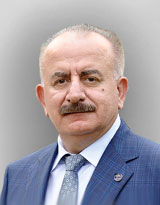
Trut Vladimir Petrovich, PhD (Doctorate) (History), Professor, “Department of Documentation and Language Communication”, Don State Technical University (1, Gagarin Sq., Rostov-on-Don, 344003, Russian Federation)
Trut V.P. The Activities of Don Partisan Loners During the Great Patriotic War. Science Almanac of Black Sea Region Countries. 2025;11(4):69-75. https://doi.org/10.23947/2414-1143-2025-11-4-69-75
 Email this article (Login required)
Email the author (Login required)
Email this article (Login required)
Email the author (Login required) 344000, Rostov-on-Don, Gagarin sqr, 1, building 8, office 411.
Tel/fax: +7 (863) 273-86-63
e-mail: science-almanac@mail.ru