Contents
Scroll to:
https://doi.org/10.23947/2414-1143-2025-11-4-54-60
Scroll to:
Introduction. In modern society, tourism is an area of cultural and business integration, attracting an increasing number of both consumers and producers of tourism services. Industrial tourism occupies a special place in this field, focusing on the artificialization of technological processes and the transformation of manufacturing enterprises into tourist attractions in the region. Industrial tourism has a history dating back more than a century. The phenomenon has been studied by cultural scholars, historians, economists, ecologists, and representatives of other scientific fields. The purpose of this study is to examine the issue of industrial tourism in the context of its impact on the optimization of the production and personnel structure of enterprises engaged in excursion and tourism activities.
Materials and Methods. The materials consisted of interdisciplinary theoretical studies that broadened the understanding of the significance of tourism in general and industrial tourism in particular for the development of the regional sociocultural situation. The basic method was a comparative analysis of the positive consequences and results of the excursion process for tourists, on the one hand, and enterprises, on the other. An empirical approach based on personal experience of visiting industrial enterprises for excursion purposes was also used. For a comprehensive study of the topic, a combination of methods from several scientific fields is used: semiotic and discourse analysis, participant observation, content analysis, network analysis, and case study method.
Results. The genesis and evolution of a specific type of tourist activity based on the openness of production processes to outside visitors are considered. The so-called “machine halls” of the first world art and industrial exhibitions of the second half of the 19th century, when ordinary people became interested witnesses of real technological cycles, are identified as the prototype of the phenomenon under study. The experience of artifying industrial processes was subsequently used everywhere. The Rostov region, which has rich natural and production resources that are attractive to tourists, has had positive experience in the development of industrial tourism.
Discussion and Conclusion. The obvious marketing benefits of industrial tours contributed to the active development of industrial tourism in the 20th and 21st centuries. This has led to the development of a symbiotic relationship between participants in tourism activities: tourists gain vivid impressions and increase their level of erudition during tours, while enterprises optimize their production and personnel structures and ensure effective self-promotion, which is recouped through the payment for tour services. In today’s world, industrial tourism is not only becoming a driver of industrial progress, but also has a positive impact on the development of regional culture, improves the economy, and forms an effective basis for employment.
Kostyuk Sh.A., Berdnik T.O. Industrial Tourism as a Factor in the Artification and Development of the Corporate Structure of Production Facilities. Science Almanac of Black Sea Region Countries. 2025;11(4):54-60. https://doi.org/10.23947/2414-1143-2025-11-4-54-60
Introduction. The second industrial revolution in the mid-19th century resulted in a massive shift to mass machine production of virtually all goods useful to humans. Fundamental changes based on innovations in the technological sphere became a decisive factor in the industrialization of society and rapid economic development. Although it had a progressive significance for the civilizational process as a whole, the mechanization of production was met with mixed reactions from public opinion.
The Arts and Crafts movement emerged in the artistic milieu of Victorian England, led by John Ruskin and William Morris, two well-known and influential figures in the visual arts of that era. Both artists sharply criticized machine production in favor of the superiority of handcrafted production and nurtured a utopian idea of reviving medieval Gothic aesthetics, professional craft guilds, and artisanal production. William Morris, who was not only an artist but also an excellent publicist, convinced both creators and consumers of industrial products that the “massification” of goods leads to the vulgarization of tastes and the aesthetic and even moral degradation of society [1, 2].
At the same time, William Morris’s ideas about the destructive influence of industrialization on culture contradicted his artistic and manufacturing practices. The principles of form creation applied by Morris in the mass production of furniture, tableware, and other interior elements were developed in the stylistic directions of early design−functionalism and constructivism−and were used in the construction of the educational concept at the Bauhaus school, the first higher educational institution to produce professional industrial designers [3].
Materials and Methods. The study of industrial tourism with an emphasis on its transformative role (artification, development of territories and corporations) is based on a strong theoretical foundation. The materials used were interdisciplinary theoretical studies that broaden the understanding of the significance of tourism in general and industrial tourism in particular for the development of the regional sociocultural situation. The basic method was a comparative analysis of the positive consequences and results of the excursion process for tourists, on the one hand, and enterprises, on the other. An empirical approach based on personal experience of visiting industrial enterprises for excursion purposes was also used. For a comprehensive study of the topic, semiotic and discourse analysis, content analysis, participant observation, and network analysis were used to study the communication and formal links between the departments involved in the tourist flow; the case study method was used for a multidimensional study of one or more specific production facilities that have implemented industrial tourism.
Results. The first Great Exhibition of the Works of Industry of All Nations, intended by its organizers to overcome consumer distrust of machine-made products, was organized and held in London in 1851 under the patronage of the British royal family (Fig. 1). The mission of the exhibition was made possible by the combined efforts of the Royal Society of Arts, representatives of industry and business, and support at the state level. More than thirty countries presented their exhibits, and alongside works of fine and decorative arts, samples of the latest industrial products were also on display. Thus, industrial goods, on a par with products of artistic activity, gained the status of an integral element of the aesthetic development of the spatial environment [3].
German architect and art theorist Gottfried Semper was commissioned to create the overall design concept for the exhibition. An important factor in popularizing industrial production was the so-called machine hall. Based on Semper’s architectural design, a gallery was built to house the most advanced machines of the time, which produced goods right before the visitors’ eyes. Turning the production process into a bright and exciting show attracted many viewers and changed their opinion about its unattractiveness, danger, and inhumanity: satisfied curiosity gave rise to acceptance of industrial production and its products.

Fig. 1. Machine hall at the First Great Exhibition of the Works of Industry of All Nations. Architect: Gottfried Semper. 1851, London
The effect was so obvious that the creation of machine pavilions with the latest production equipment became traditional for all subsequent world industrial exhibitions at the end of the 19th century. Over the years, their design was entrusted to the most advanced and authoritative architects, in particular, at the 1867 World’s Fair of Art and Industry in Paris, the author of the machine hall project was Gustave Eiffel, who later built his famous tower for the 1889 exhibition, which became an engineering and architectural marvel of its time [4].
The building itself, designed by architect Joseph Paxton specifically for this event, served to popularize the achievements of industrial production. The huge building was assembled from lightweight metal structures in record time thanks to the use of advanced construction technologies. Paxton was the first to use continuous glazing in a public building, which made it look like a sun-filled greenhouse. It was so unexpected and impressive that journalists nicknamed the building the Crystal Palace. In a sense, the Crystal Palace itself became the main exhibit, attracting and delighting visitors from all over the world [5].
Thus, industrial exhibitions in the 19th century deliberately sought to give visitors aesthetic pleasure from contact with the production and technological processes involved in manufacturing a product. This goal later became the basis for industrial tourism, so exhibition events can be considered the prototype of a phenomenon that developed in the 20th and 21st centuries.
The first enterprise to open its doors to visitors was the Jack Daniel’s distillery, producer of the world-famous whiskey brand in Tennessee, USA. The distillery’s initial foray into tourism in 1866 was unsuccessful and was forgotten for a long time. However, it is believed that this was when industrial tourism began [6]. Its marketing function soon became apparent, which contributed to the active development of the industry. The main objects of industrial tourism were wineries, cheese factories, and fruit plantations, where the excursion program necessarily included tasting and advertising promotion of products.
The main concept of modern industrial tourism is the opportunity to visit operating production facilities, learn about technological processes, and sometimes even participate in them directly. For tourists, this is a unique chance to gain vivid impressions from visiting unusual places and learning about the manufacturing process of various goods. Satisfying consumers’ natural curiosity is a key factor in the success of this business, because, like all other types of tourism, industrial tourism primarily serves an entertainment and leisure function [7, 8, 9].
For manufacturing organizations, excursion events are attractive because they are an effective way to advertise the company’s activities. During the tour, the manufacturer demonstrates its advanced technologies, employee professionalism, high product standards, environmentally friendly policies, etc. in the most positive context. By using this convenient resource to communicate with consumers, the company positions itself as a market leader and a leading regional brand [10].
The result is the formation of trust in the company and the quality of its products. As a rule, tourists actively share their impressions in personal contacts and through social networks, ensuring effective promotion of the positive image of the manufacturing brand. An attractive image of the company, in turn, contributes to an increase in the number of potential customers. The costs of such highly effective advertising are successfully covered by the fees paid by tourists for the tour.
Thanks to the openness of technological processes to outside observers, the culture of production is improving and the corporate structure is developing. The workshops are kept clean and tidy, and employees pay attention to their appearance, behavior, and communication skills, which has a positive effect on working relationships and labor discipline. In addition, employees develop pride in their company and profession [11, 12].
Another important factor in the appeal of excursions for enterprises is career guidance activities aimed at attracting young employees. Large manufacturing organizations develop interesting tours for schoolchildren and students of higher and secondary educational institutions to inspire them with the perfection of technological processes and interest them in employment. In this way, the personnel system of manufacturing organizations is improved.
One of the Russian enterprises actively implementing a tourist program is the Novolipetsk Metallurgical Plant (Fig. 2). Here, one-and-a-half-hour tours are conducted in the blast furnace and rolling mills, where tourists witness the breathtaking beauty and power of technological processes, which, carried out in real time, turn into a spectacular show for tourists. To make the tour more attractive, Russia’s only ecological park, Swan Lake, with a beautiful aviary, has been created on the territory of the plant. For visitors, this is a very vivid confirmation of the environmental friendliness and cleanliness of production (Fig. 3).
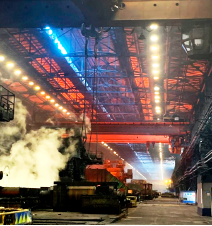
Fig. 2. Steel rolling shop at the Novolipetsk Metallurgical Plant(photo by the author)

Fig. 3. Swan Lake Ecological Park at the Novolipetsk Metallurgical Plant (photo by the author)
Benchmarking is becoming an effective form of industrial tourism. The essence of this phenomenon is that experts, representatives of partner companies, or production associations with similar activities act as tour guides. The purpose of such visits is to conduct a comparative analysis of various aspects of the enterprise’s activities in order to study its advanced methods and further use them to improve one’s own results [13].
The leading researcher of this phenomenon is British economist Anthony Barnes Atkinson. The scientist identified three types of benchmarking based on the comparison of certain characteristics:
− product benchmarking, when the final products are analyzed and the quality of one’s own product is compared with that of competitors;
− functional, when technological functions and processes are compared, as well as the costs of their implementation;
− strategic, when global strategies and prospects for market development in the relevant industry are compared [13].
As a rule, for a comprehensive analysis, all three types of benchmarking are carried out in conjunction, which contributes to the development of best practices for improving the industry and minimizing associated problems and negative consequences [15, 16]. Often, after a tour of the enterprise, tourists are given the right to purchase manufactured products at a loyal price without trade markups. This opportunity is especially attractive for visitors to enterprises that manufacture souvenirs or food and beverages [17].
One such example is the Imperial Porcelain Factory in St. Petersburg founded in 1744 by Empress Elizabeth I. In addition to an exciting tour of the production workshops and information about the history of the enterprise, tourists can purchase unique products from the factory at affordable prices in a store that is closed to ordinary customers. Another example is the Massandra Production and Agricultural Association Joint Stock Company in southern Crimea, founded by Prince Lev Sergeyevich Golitsyn (Fig. 4). Visitors learn about its rich history, dating back to 1892, see all stages of production and storage of famous wines, taste the wine collection, and finally purchase their favorite samples in a specialized store at the enterprise.
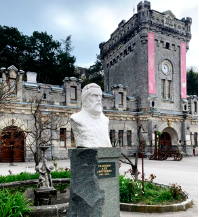
Fig. 4. Massandra Agricultural Production Association in Crimea (photo by the author)
The Rostov Region, being the largest agro-industrial region, is actively involved in the development of industrial tourism. There are many successful manufacturing enterprises in the region that are happy to open their doors to visitors.
The leading manufacturing giant in the region is the Rostselmash Group of Companies, which produces high-tech agricultural machinery. The company is actively developing its excursion activities, revealing the main production processes in the context of modern innovative technologies to tourists. The most attractive part of the excursion program for visitors is the museum of technology, which displays samples of the company’s products throughout its history. This retrospective overview provides a clear picture of the evolution of Rostselmash’s technological achievements.
Since ancient times, the Rostov region has been the center of wine culture in the region. One of the largest enterprises continuing the traditions of winemaking in the Northern Black Sea region is the joint-stock company “Tsimlyansk Wines.” This is a full-cycle wine-making enterprise engaged in the cultivation, processing, and production of unique sparkling wines with the protected geographical indication “Don Valley.” The company’s wines are popular with consumers and collectors. However, the success of the business is also facilitated by a competent excursion policy. To develop its tourism activities, the winery organizes exciting tours of the vineyards and production facilities, including tastings and the opportunity to purchase products at reasonable prices.
Semikarakorskaya Keramika Joint Stock Company, included in the list of Russian folk-art enterprises, produces souvenir products with original designs in mass and limited editions, as well as unique items made to individual orders. Semikarakorsk souvenirs are regular participants in international exhibitions of the highest level and are often awarded diplomas and medals.
The excursion program introduces visitors to the history and all stages of production of the famous souvenirs. But the highlight of the excursion is the master classes, which give visitors the opportunity to create their own version of a product within the artistic tradition and keep it as a souvenir. After gaining this experience, tourists are eager to purchase the company’s products, which, due to their uniqueness, have become a real souvenir marker of the region [18].
Discussion and Conclusion. Over more than a century of industrial tourism development worldwide, a variety of technologies for interacting with consumers of tourism products have been developed. In the era of post-industrial society, when a fundamental change in the socio-cultural paradigm took place and the service sector became the main economic resource, tourism became an effective factor in social progress. Attention is being focused on a phenomenon known as the “experience economy.” Customers of tourism services are now looking not only for passive recreation and entertainment, but also for new knowledge, new experiences, and the discovery of processes that were previously hidden from them. In these conditions, familiarity with production technologies is becoming an increasingly popular request among tourists.
Companies that open their doors to tourists benefit both directly from the payment for tour services and the sale of souvenirs, and indirectly from the effect of indirect advertising. By showing production processes in a positive light, manufacturing brands build a positive image in the minds of consumers, which has a marketing effect and also has a positive impact on human resources policy.
Thus, industrial tourism makes a significant contribution to the development of civilizational processes by promoting regional production culture in the context of its history, current state, and future prospects.
1. Morris W. Art and Life. Moscow: Iskusstvo; 1973. (In Russ.)
2. Bhaskaran L. Designs of the times. Moscow: Art-Rodnik; 2009. (In Russ.)
3. Allen R. The British Industrial Revolution in Global Perspective. Moscow: Izdatelstvo Instituta Gaydara; 2014. 448 p. (In Russ.)
4. David Landes. “Why Europe and the West? Why Not China?”. Journal of Economic Perspectives. 2006;20(2):3–22.
5. Halavach E.P., Khutova E.N. Trends of development of industrial tourism in the world. Vestnik of Brest State Technical University. Economy. 2018;111(3):10–14. (In Russ.)
6. Chkhotua I.Z., Vlasyuk L.I. Strategic Analysis of the Region’s Competitive Advantages in the Context of Industrial Tourism Development. Strategizing: Theory and Practice. 2021;1(2):190–205. (In Russ.) https://doi.org/10.21603/2782-2435-2021-1-2-190-205
7. Polyanina S.S., Dokashenko L.V. The essence of industrial tourism and its types. University complex as a regional center of education, science and culture, materials of the All-Russian scientific method. Conf., Orenburg; pp. 1773–1776. (In Russ.)
8. Berdnik T.O., Bondar Ju.A., Gurin M.V. Experience in Design Engineering of Hotel Facilities of Tourist Infrastructure of the Black Sea Coast. Science Almanac of Black Sea Region Countries. 2025;11(2):62‒67. (In Russ.) https://doi.org/10.23947/2414-1143-2025-11-2-62-67
9. Pine J.B., Gilmore J.H. The Experience Economy: Work is Theatre & Every Business a Stage. Moscow: Williams; 2005. 299 p. (In Russ.)
10. Kvint V.L., Okrepilov V.V. Quality of life and values in national development strategies. Herald of the Russian Academy of Sciences. 2014;84(3):188–200. https://doi.org/10.1134/S1019331614030058
11. Jia Y. Analysis and suggestions on Chinese industrial tourism development. International Business Research. 2010;3(2):169–173. https://doi.org/10.5539/ibr.v3n2p169
12. Kadyrov R.V., Mudarisov R.G. Industrial tourism as creative marketing. Bulletin of the Altai Academy of Economics and law. 2018;8:88–94. (In Russ.)
13. Atkinson A.A., Banker R.D., Kaplan R.S., Young S.M. Management accounting. Moscow: “Williams” Publishing House; 2005. Pp. 568–575. (In Russ.)
14. Ivanushkina A.V. Benchmarking as a tool for competitive analysis of corporations. Bulletin of the Altai Academy of Economics and law. 2018;1:65–73. (In Russ.) URL: https://vaael.ru/ru/article/view?id=24/ (accessed: 30.07.2025).
15. Atkinson A.B. The Luxembourg Income Study (LIS): Past, Present and Future. Socio-Economic Review. 2004;2(2):165–190. https://doi.org/10.1093/soceco/2.2.165
16. Iaţişin T. and Colesnicova, T. Analysis of obstacles on wine tourism development in the Republic of Moldova. Scientific Papers Series Management, Economic Engineering in Agriculture and Rural Developmen. 2017;17(2):173–176.
17. Talmaciu M., Manolescu I.T. Enhancing competitiveness and resilience of tourism in crises condition. Experiences from Eastern Partnership countries. CES Working Papers. Centre for European Studies, Alexandru Ioan Cuza University; 2022;13(4):381–399.
18. Industrial tourism. Official portal of the Government of the Rostov Region. URL: https://www.donland.ru/activity/600/ (accessed: 30.08.2025).
Kostyuk Shirin Aaliyevna, Cand. Sci. (Sociology), Director of the Institute of Journalism and Communication at Kyrgyz National University (547, Frunze St., Bishkek, 720033, Kyrgyzstan)
Berdnik Tatyana Olegovna, Cand. Sci. (Philosophy), Professor, Head of the Department of Design, Don State Technical University (1, Gagarin Sq., Rostov-on-Don, 344003, Russian Federation)
Kostyuk Sh.A., Berdnik T.O. Industrial Tourism as a Factor in the Artification and Development of the Corporate Structure of Production Facilities. Science Almanac of Black Sea Region Countries. 2025;11(4):54-60. https://doi.org/10.23947/2414-1143-2025-11-4-54-60
 Email this article (Login required)
Email the author (Login required)
Email this article (Login required)
Email the author (Login required) 344000, Rostov-on-Don, Gagarin sqr, 1, building 8, office 411.
Tel/fax: +7 (863) 273-86-63
e-mail: science-almanac@mail.ru