Contents
Scroll to:
https://doi.org/10.23947/2414-1143-2025-11-4-42-47
Scroll to:
Introduction. Unlike pagan religions and philosophical systems, where the idea is that the main thing in a person is the soul, and the body is only a temporary shell in which the soul develops, Christian faith does not share such an understanding of human nature. Giving preference to the spirituality in a person, it still sees in them a fundamentally twopart being consisting of complementary sides: spiritual and material. This article offers a consideration of the problem of attitude to death in patristic anthropology.
Materials and Methods. The methodology is complex, due to the interdisciplinary approaches to the study of the problem. The leading research methods were conceptual and logical analysis of theoretical terminology and methods of historical and genetic analysis of scientific methodology.
Results. It is noted that Christianity preferring the spirituality in a person, nevertheless sees in them a fundamentally twopart being consisting of complementary sides: spiritual and material. The victory of death in our life was the result of a violation of the commandment and the immutability of divine promises. Moreover, the ancestral sin is the essence of the concept of death, and the cause of death is not in God, but in person. God guides us through the gates of death in order to exalt the dignity of life.
Discussion and Conclusion. It is proved that ontologically death, like evil, does not exist. God, who did not create evil, does not create death. Just as evil is a lack of good, so death is a lack of life. Paradoxically, death is an act of divine mercy and can be beneficial. Let’s add that death is fraught not only with benefit but justice. After all, God Himself accepts it. The justice of death is also expressed in restriction in the world of sin. Another important conclusion should be an indication of the need to remember the impending death as the most important soteriological circumstance of our life, since it allows us to defeat sinful tendency. Being mortal means not only being involved in the evil that it carries, but also in the good, in particular, the ability to attain the martyr’s crown. The problem of death is not the end, but the beginning of everything that is prepared for the soul, therefore our death must be met with our own life.
Ter-Arakelyants V.A. Attitude to Death in Patristic Anthropology. Science Almanac of Black Sea Region Countries. 2025;11(4):42-47. https://doi.org/10.23947/2414-1143-2025-11-4-42-47
Introduction. Although daily experience says that death is the immutable destiny of every human being and the law of nature, the Holy Scriptures teach that originally death was not part of God’s plans for a person. Death is not God’s established norm, but rather evasion and the greatest tragedy. The book of Genesis says that death invaded our nature as a result of the violation by the first people of God’s commandment. According to the Bible, the purpose of the coming into the world of the Son of God was to return to a person the eternal life they had lost. Here we are not speaking about the immortality of the soul, because by its nature it is not subject to destruction, but about the immortality of a person as a whole consisting of soul and body.
The restoration of the unity of the soul with the body should be realized for all people at the same time with the universal resurrection of the dead. Nevertheless, St. John Chrysostom, speaking about what death has become for us, portraying it highly artistically, writes: “Death is an inexorable executioner, death is an inevitable sentence, death is an impartial rapist of our kind, death is an unmasked killer, death is a natural traveler, death without a report appears in the face of kings, death is a predator, and day and night with the same art doing its job, death is a robber, a kidnapper of truth, death is only a welcome guest for the righteous. Hearing this, beloved, we will be awake and sober, so as not to fall asleep again with a sinful dream” [1].
In contrast to this opinion, the idea of death is now approved as a natural, normal and finite phenomenon for a person. St. Justin (Popovich) writes about this: “First, unconsciously, and then systematically consciously and deliberately, to a European person, through science, philosophy, and culture, they injected the idea that a person is mortal without a trace. This idea gradually took shape in a belief that says: death is a necessity. Death is a necessity! Is greater horror, insult and ridicule possible: a person’s greatest enemy is necessary for a person?! Tell me, is there any logic here, at least some, at least children’s or even insect logic? Maybe the European person, crushed and ground in the mill of death, lost the last drop of their mind and began to rave?” [2].
At the same time, no one argues about the inevitability and even inexorability of death, emphasizing its special character, about which the Monk Ephraim Sirin writes: “The angel of death does not know what a request is, puts any prayer in anything, no deplorable cry touches him, no painful cries arouse compassion in him. He does not pay attention to gifts, is not seduced by gold, separates the mother from her children; and they remain orphans, deprived of her community. The angel does not spare the beautiful, he does not mercy the strong at all, destroys the beauty of his face and turns it into pus in hell. The angel scorches the attractive color of the skin, and the beauty of the body disappears instantly; darkness covers the light of the eyes, blocks the hearing by deafness. Any decoration turns into stench; tramples all jewelry in the coffin; all sorts of lips make you cry out: alas! every voice becomes soreness” [3].
Materials and Methods. In the study, the methodology is comprehensive, due to the interdisciplinary approaches to studying the problem. The study of the problem of death in the light of patristic thought is in the steady development of the philosophy of religion, philosophical anthropology and a whole range of philosophical and general scientific methods: analytical, phenomenological, principles of objectivity, universal connection, contradiction, methods of comparative analysis and synthesis, scientific generalization. The study uses a conceptual and logical analysis of theoretical terminology in order to define the concept of death for the socio-cultural context.
Methods of historical and genetic analysis of scientific methodology are involved to analyze its reorientation from a formal theoretical setting to a socially significant one. The initial methodological idea of research is dialectical and systemic approaches. Philosophy of religion and philosophical anthropology of the topic of death needs a new research methodology with the involvement of a new conceptual apparatus and methodological tools. Methodology as a logical organization for solving the “problem of death” is to determine the purpose and subject of research, find approaches and guidelines for the problem, and choose research methods. The religious and philosophical aspect of this topic is also an object of social research. This is due to the ambiguity of the idea of “death concept”. Modernity requires clarification and development of this concept corresponding to their new understanding.
Results. In some religions and philosophical systems (for example, in Hinduism and Stoicism), the idea is that the main thing in a person is the soul, and the body is only a temporary shell in which the soul develops. When the soul reaches a known spiritual level, the body ceases to be necessary and must be thrown off like demolished clothes. Freed from the body, the soul ascends to a higher stage of being. The Christian faith does not share such an understanding of human nature. Giving preference to the spiritual principle in a person, it still sees in them a fundamentally two-part being consisting of each other complementary sides: spiritual and material. There are also simple disembodied creatures like angels and demons. However, a person has a different device and purpose. Thanks to the body, its nature is not only more complicated, but also richer. The certain union of soul and body is an eternal union made by God.
Moreover, the ancestral sin is the essence of the concept of death. The fact that the cause of death is not in God, but in person, St. Basil the Great asserts: “It was not God who created death, but we ourselves brought it upon ourselves with a crafty deed” [4]. For this, God guides us through the gates of death in order, as St. Ephraim believes, to exalt the dignity of life: “According to God’s providence, one life is changed to another, eternal, by the action of death, so that through the test the dignity of His gift is further exalted” [3]. The Christ defeated not blessing but the evil of death, therefore the saint further writes: “Death began with Adam, and its course spread to the Christ. The Christ abolished its power, took away the sting from sin, and in all generations, it is preached that death in the Christ is defeated by His humanity” [3].
According to St. Ignatius as a result of the fall, the relationship between soul and body changed. He writes: “By the fall, both the soul and the body of a person changed... The fall was a death for them ... death is only the separation of the soul from the body, previously already put to death by the retreat from them of True Life, God” [5]. The victory of death in our life was the result of a violation of the commandment and the immutability of divine promises. Saint Athanasius the Great writes about this: “Death overcame us by the force of the law, and it was impossible to avoid the law, since it was decreed by God because of the crime” [6]. He notes: “Then there would be no truth in God if, when God said that you would die, a person did not die” [6]. This raises the question what is now more natural life or death?
Reflecting on this subject, the Rev. Nicholas of Serbia writes: “So is death the only reality, and life an accident in this world, or is the opposite true? The Christ discovered and proved: the opposite is true” [7]. When the soul leaves its body after death, it falls into conditions alien to itself. Indeed, it is not meant to exist as a ghost and finds it difficult to adapt to new and unnatural conditions for it. That is why, in order to completely eliminate all the destructive effects of sin, God wanted to resurrect the people he created. This will happen at the second coming of the Savior, when, according to His almighty word, the soul of every person will return to its restored and renewed body. It must be repeated that it will not enter a new shell, but will connect precisely with the body that belonged to it before, but renewed and imperishable, adapted for new conditions of being.
It was the original sin that caused the current state, which is characterized by death and corruption. We read in the Monk Simeon the New Theologian: “The words and definitions of God are made by the law of nature. That is why there is the definition of God, uttered by Him as a result of the disobedience of the first Adam, that is, the definition of death and corruption, became the law of nature, eternal and unchanging” [8]. Rev. Isidore of Pelusium, considering sin the cause of death, writes: “Sin is firewood, and death is fire. In what it found its characteristic food, it devoured that. If it did not find it in the Christ, it naturally faded away, it is better to say, it died” [9].
As for the temporary state of the soul from the time of its separation from the body to the day of the general resurrection, the Holy Scriptures teach that the soul continues to live, feel and think. “God is not God of the dead, but of the living, for all are alive with him”, said the Christ (Matt. 22:32; Eck. 12:7). Death, being a temporary separation from the body, in the Holy Scriptures, is called either departure, separation, or assumption (2 Pet. 1:15; Phil. 1:23; 2 Tim. 4:6; Dejan. 13:36). Saint John Chrysostom writes: “When the Christ came and died for the life of the world, death is no longer called death, but sleep and assumption” [10]. And elsewhere: “The power of death and true death is the one when the deceased no longer has the opportunity to return to life; if after death they come to life, and moreover with a better life, then this is not death, but assumption” [10].
St. Ephraim has the same thought: “From the Christ to this day, death for us is one dream and the separation of the soul from the body until the day of our renewal” [3]. St. Basil the Great remarks: “Death for the righteous is a dream, or rather, a departure for a better life” [4]. It is clear that the word assumption (sleep) does not refer to the soul, but to the body, which after death seems to be resting from its labors. The soul, having separated from the body, continues its conscious life, as before. Rev. Ephraim Sirin writes on this occasion: “The bodily only weaves cover, dilapidated from diseases, and the soul, as it is, forever remains alive and incorruptible... The soul of the «dead» lives and thinks, the Creator observes it in Eden, and their body is kept in the ground, before returning it is entrusted to it as a pledge” [3]. On the other hand, as Saint Chrysostom believes, death is the destruction of corruption: “Death... is nothing more than the perfect destruction of corruption because death destroys not just the body but its corruption” [10].
Rev. Maximus the Confessor understands death as evil and sin. Just as evil and sin are distances from the source of good — God, death is the same. The saint writes: “Death, in fact, is a distance from God; the sting of death is a sin that Adam having absorbed at one time, became expelled from the tree of life, from paradise, and from God, which was followed by bodily death” [11].
It is natural to answer the question, what gives rise to what and what should be feared more? Saint Chrysostom, answering this question, remarks: “Let us tremble not before death, but before sin; not death gave birth to sin, but sin produced death, but death became the healing of sin” [10]. The same saint connects fearlessness before death with faith in the Resurrection. “Who is able to deeply assimilate the thought of the Resurrection, will they be afraid of death, will they be afraid of anything else?” [10]. Moreover, as the Monk Ephraim Sirin believes: “Death, which is terrible for everyone and terrifies mortals, appears to the God-fearing feast” [3]. He writes: “On the day of death, only the righteous rejoice, who have acquired righteous deeds on their way and have marriage clothes” [3]. According to him: “Death of the righteous is the end of the struggle with the passions of the flesh; after death, wrestlers are glorified and take victory crowns” [3].
The theme of death and resurrection is one, hence the feelings of a believer are built. The triumph of faith will be the death of the righteous, because: “The Saints with the Heavenly Forces will soar to the heights to meet our God when He comes; with Him they will enter the truth, which is restoration, to accept the reward in the land of Life, which is above all fear” [8].
Rev. Simeon the New Theologian considers the death of the righteous to be something desired for them. “Since Christians after the Cross and the Resurrection of the Christ are certified that, dying in the Christ, pass from death into Life and into the joy of staying with the Christ, they wish death. For if the Spirit of the Christ is the life of the soul, what is the use of those who have received it to live in this world and thereby be eliminated from the joy that is provided by the demand with the Christ?” [8]. The fact that death is a prologue to the resurrection from the dead, and the resurrection is necessary not for the soul, but for the body, St. John Chrysostom says: “If the body does not rise, then a person will not rise, because a person is not only soul, but soul and body” [10].
St. Gregory of Nyssa considers the Lord Jesus Christ to be our Savior from death and the exit of us to the resurrection: ... “Our exterminator was death, which the God then led into inaction, when being immovable in the place where he was, he seemed to us to be sabbatical, he overcame the power of death, paving his way for all those who died to the resurrection from death” [12]. “Now, St. Athanasius the Great says, since the Savior has resurrected the body, death is no longer terrible, but all believers in the Christ trample on it as insignificant and rather decide to die than renounce faith in the Christ” [6]. There is another understanding of death. Saint Maxim the Confessor does not at all consider death what it is called: “The end of real life is unfair, I think, to call death, but rather deliverance from death, removal from the region of corruption” [11].
Reflecting on this topic, St. John Chrysostom writes: “What is death? The same as taking off clothes: the body, like clothes, clothes the soul, and through death we put it off ourselves for a short time in order to get it again in its brightest form” [10]. St. Athanasius the Great, developing the idea of the nature of a person, which is formed by God from nothing, writes: “Death, having reigned, took possession of people, because the crime of the commandment returned them to their natural state, so that both they were created from nothing and in being itself, over time, in all justice suffered corruption” [6]. The dual phenomenon of death in people’s lives is expressed in the fact that, on the one hand, as St. Theophan the Recluse believes: «Death is the door to the fatherland for a blissful life” [13] and St. Ignatius writes: “Death is a great sacrament. It is the birth of man from earthly, temporary life into eternity” [5].
Saint Cyprian of Carthage says the same: ... “Death is not an event, but only a transition, or resettlement to eternity, at the end of a temporary path” [14]. Then it is liberation, about which St. Chrysostom again writes: ... “Death is liberation from all unexpected disasters, and who died with good hope is no longer subject to unknown, but is safe” [10]. On the other hand, it is the greatest sorrow and bitterness. Rev. Ephraim Sirin writes, “No death is as bitter as the death of a wicked sinner. Their wickedness burns fire and unquenchable flame, despair and loss of all hope. Deliver us, <God>, from such a death and have mercy for us according to your goodness” [3].
Moreover, for a believer, grief on the occasion of death is not worthy. Saint Chrysostom writes: ... “Let no one despair for the dead: for God, everyone is alive, awake and falling into sleep according to His will” [10]. He claims that death is the liberation from the power of the devil: “He who overthrows the grave power of death also crushes the power of the devil” [10]. The negative component of this phenomenon is that death brings the destruction of the integral state of a person. According to St. Ignatius Bryanchaninov: “Death painfully cuts and tears a person into two parts, their components, and after death there is no longer a person: their soul exists separately, and their body exists separately” [5].
Saint Tikhon Zadonsky, reflecting on the topic of death, writes: “Death is «triform»: bodily, spiritual and eternal. Bodily death consists in the separation of the soul from the body. This death is common to everybody, righteous people and sinful people, and it is inevitable, as we see. God’s Word speaks about this death: «people are supposed to die one» day” (Heb. 9:27). The second death is eternal, by which condemned sinners will die eternally, but can never die; will wish to turn into nothing because of cruel and unbearable torment, but will not be able to. The Christ speaks about this death: «But the fearful and the unfaithful, and the wicked and the murderers, and the lovers and the sorcerers, and the idolaters and all the liars, have a fate in the lake burning with fire. This is the second death» (Apoc. 21:8). The third death is spiritual, by which all who do not believe in the Christ, the true Life and the Source of Life, are dead. Also, Christians who confess God and the Christ, the Son of God, but live lawlessly, are dead by this death” [15].
However, neither death itself causes us grief, but a bad conscience. Saint John Chrysostom writes: “It is not death that causes sorrow, but a bad conscience. Therefore, stop sinning and death will become desirable for you” [10]. The fear of death is not from God either. Rev. Nikon Optinsky (Belyaev) teaches: “Fear of death is from demons. They instill in the soul such fear as to deprive the hope of the mercy of God” [16]. St. Basil the Great taught: “Death is sent to those who have reached the limit of life, which from the beginning is laid in the righteous judgment of God, who has foreseen from afar what is useful for each of us” [4].
Patristic thought is based on the statement that ontologically death, like evil, does not exist. God, who did not create evil, does not create death. Just as evil is a lack of good, so death is a lack of life. Repentance is the only way of perceiving the fruits of our salvation performed by the Lord Jesus Christ. The soul of the righteous believes that through repentance our salvation is possible. At the same time, only virtues can be the protection and salvation of the soul. Rev. Isidore of Pelusium teaches: ... “The assumption of lovers of virtue... is the end of sorrows and the beginning of benefits. For the end of feats is the beginning of crowns” [9]. Saint John Chrysostom speaks about this: “Those who carefully work in virtue, moving away from the local life, truly, as it were, are released from suffering and bonds” [10].
He even sees the death of the righteous as their personal good: ... “I want everyone, when they or their neighbors are called <to the afterlife>, to walk with joy and fun, and greet others walking” [10]. Death has another quality. Paradoxically, it is an act of divine mercy. It should be added that death is fraught not only with benefit, but justice. After all, the God Himself accepts it. The justice of death is also expressed in restriction in the world of sin. Of course, acceptance of death, humility in relation to it is directly dependent on spiritual age. Another important conclusion should be an indication of the need to remember the impending death as the most important soteriological circumstance of our life, since it allows us to defeat sinful tendency. Being mortal means not only being involved in the evil that it carries, but also in the good, in particular, the ability to attain the martyr’s crown. The problem of death is not the end, but the beginning of everything that is prepared for the soul, therefore our death must be met with our own life.
1. John Chrysostom St. At the beginning of the Lent, and about the Lent. Orthodox quotes. (In Russ.) URL: https://azbyka.ru/quotes/umnymi-rechami-ne-ostanovish-smert/ (accessed: 28.09.2025).
2. Justin (Popovich). Collection of creations of the Monk Justin (Popovich): biography. Path of God-knowing. Translated from Serb. by S. Fonova. Moscow: Pilgrim; 2004. (In Russ.)
3. Ephraim Sirin. At 6 parts. Sergiev Posad; 1901−1912. Quotes from the Holy Fathers of the Orthodox Church. (In Russ.) URL: https://svyatye.com/Prepodobnyi-Efrem-Sirin/O-tele/?ysclid=majy9q7wml265261654/ (accessed: 28.07.2025).
4. Basil the Great: Creations. At 7 parts. Moscow; 1845−1848. Quotes from the Holy Fathers of the Orthodox Church. (In Russ.) URL: https://svyatye.com/chitat/Sviatitel-Vasilii-Velikii-Tvoreniia-Hexaemeron/ (accessed: 28.06.2025).
5. Ignatius. Saint. Word about death. Saint Petersburg: V. Askochensky; 1862. V. 3. URL: https://rusneb.ru/catalog/000199_000009_003575283/ (accessed: 28.07.2025).
6. Athanasius of Alexandria. Creations. Entry. Art. A.V. Gorsky. Moscow; 1851−1854. (In Russ.)
7. St. Nicholas of Serbia. Thoughts about good and evil. Translated from Serbian by S.A. Luganskaya. Moscow: Publishing House Moscow compound of Holy Trinity-Sergius Lavra; 2001. 132 p. URL: https://azbyka.ru/otechnik/Nikolaj_Serbskij/mysli-o-dobre-i-zle/ (accessed: 28.02.2025).
8. Words of the Monk Simeon the New Theologian. Translated from modern Greek into Russian by ep. Theophanes. Moscow: Publishing house of the Athos Russian Panteleimon Monastery; 1890. No. 1−2: Words. URL: https://azbyka.ru/otechnik/Simeon_Novyj_Bogoslov/slovo/ (accessed: 28.07.2025).
9. Creations of Saint Isidore of Pelusium. Moscow: type. V. Gauthier; 1859−1860. P. 1. 1859. 468 p. URL: https://azbyka.ru/otechnik/Isidor_Pelusiot/sobranie-sochinenij/ (accessed: 28.08.2025).
10. Creations of the Holy Father of our John Chrysostom, Archbishop of Constantinople in Russian translation. Saint Petersburg: Saint Petersburg Spiritual Academy, 1895−1906. V. 1. URL: https://rusneb.ru/catalog/000199_000009_003127511/ (accessed: 28.07.2025).
11. Creations of the Monk Maxim the Confessor. Translation. Introductory article. Comments by A.I. Sidorov. Moscow: Martis; 1993. URL: https://azbyka.ru/otechnik/Aleksej_Sidorov/tvorenija-prepodobnogo-maksima-ispovednika-kniga-ibogoslovskie-i-asketicheskie-traktaty/ (accessed: 28.07.2025).
12. Gregory of Nyssa. Creations. At 8 parts. Translated by Moscow Theological Academy. Moscow: Type. V. Gauthier; 1861−1872. URL: https://rusneb.ru/catalog/000199_000009_004335613/ (accessed: 28.06.2025).
13. Theophanes the Recluse. Saint Theophan the Recluse Vyshensky, Bishop of Tambov. URL: https://azbyka.ru/days/sv-feofan-zatvornik (accessed: 28.06.2025).
14. Cyprian of Carthage. Creations of the Holy Martyr Cyprian Bishop of Carthage. Book on mortality. URL: https://azbyka.ru/otechnik/Kiprian_Karfagenskij/kniga_o_smertnosti/ (accessed: 28.02.2025).
15. Tikhon Zadonsky. Brockhaus and Efron Small Encyclopedic Dictionary. 2nd ed., revised again and added. V. 1−2. Saint Petersburg, 1907−1909. URL: https://dic.academic.ru/dic.nsf/brokgauz_efron/101443/Тихон?ysclid=mikiig9lip453317093 (accessed: 28.07.2025).
16. Nikon Optinsky (Belyaev). Moscow: Orthodox Encyclopedia; 2000. V. 50. Pp. 728−732. (In Russ.)
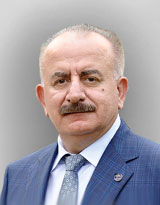
Ter-Arakelyants Vladimir Arakelovich, PhD (Doctorate) (Philosophy), Professor, “Department of Philosophy and World Religions”, Don State Technical University (1, Gagarin Sq., Rostov-on-Don, 344003, Russian Federation)
Ter-Arakelyants V.A. Attitude to Death in Patristic Anthropology. Science Almanac of Black Sea Region Countries. 2025;11(4):42-47. https://doi.org/10.23947/2414-1143-2025-11-4-42-47
 Email this article (Login required)
Email the author (Login required)
Email this article (Login required)
Email the author (Login required) 344000, Rostov-on-Don, Gagarin sqr, 1, building 8, office 411.
Tel/fax: +7 (863) 273-86-63
e-mail: science-almanac@mail.ru